
Finance Minister Nirmala Sitharaman on Sunday proposed Rs 10,000 crore investment in the biopharma sector over the next five years, a move which would give a boost to the country's pharmaceuticals industry.

A cyberattack on an automaker can spread through its wider supply chain and create significant financial losses.

Indian startup funding plummeted by 43 per cent year-on-year to $7.81 billion between March 1 and June 15, 2026, largely due to the West Asia conflict, which has amplified global risk perceptions, tightened liquidity, and led to rupee depreciation, making global investors cautious.

Due to the prevailing geopolitical situation, like-minded countries are collaborating with India to make it a major semiconductor manufacturing destination, a top Electronics and IT ministry official said on Sunday. In an interview with PTI, Ministry of Electronics and IT Secretary S Krishnan said pilot facilities of US storage semiconductor maker Micron and Tata Electronics have already rolled out chips, and their main plants in Gujarat will begin to produce made-in-India chips from the later part of 2025.

The political confidence required to place high-end Japanese aircraft and personnel on Indian soil is itself a data point.
It indicates a level of trust that would have been difficult to imagine when India-Japan defence ties were largely symbolic, explains Varun Arya.

'Improved law and order and transparent governance have helped change UP's investment image.'

An Indian AI Research Organisation official says India has adopted a balanced and pragmatic approach to AI regulation, avoiding the extremes of the US and EU models.

Larsen & Toubro (L&T) is investing Rs 5,000 crore over five years to enter the automotive components sector, focusing on electric vehicle (EV) motors, safety systems, and connected-vehicle technologies, aiming to become a Tier-I auto supplier.

Micron plans an assembly testing, marking and packaging project of $1 billion, and talks are on to set up a memory chip plant for captive requirements.

Global semiconductor giant AMD projects the overall market for compute infrastructure, driven by artificial intelligence, to reach USD 2 trillion by 2030 from USD 365 billion in 2025. The company unveiled new products and its Helios AI infrastructure, emphasising an open ecosystem and significant performance gains over competitors, with India playing a key role in its global rollout.
Global semiconductor giant AMD projects the overall market for compute infrastructure, driven by artificial intelligence, to reach USD 2 trillion by 2030 from USD 365 billion in 2025. The company unveiled new products and its Helios AI infrastructure, emphasising an open ecosystem and significant performance gains over competitors, with India playing a key role in its global rollout.
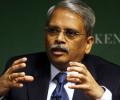
Infosys co-founder Kris Gopalakrishnan urges Indian startups to focus on deep technology and advanced manufacturing to ensure strategic autonomy.

For the foreseeable future, the most likely outcome remains continuation of the status quo. Taiwan will remain self-governing without formally declaring independence, while China continues to apply sustained pressure short of war, predict Krishnan Srinivasan and Manoj Mohanka.

Info Edge, the parent company of naukri.com, has invested over 1,000 crore in more than 50 artificial intelligence (AI) and deep-tech startups since 2020, demonstrating its commitment to fostering India's emerging technology ecosystem.

Over 100 Indian institutions offer semiconductor design curricula, but hardly any of them focuses on manufacturing and process technology, a top official from global memory and storage major Micron Technology said on Thursday. There is significant global demand for such chip engineers, its president and chief executive Sanjay Mehrotra said at the 10th Vibrant Gujarat Global Summit in Gandhinagar. "While more than 100 Indian institutions provide a semiconductor design curriculum, hardly any focus on semiconductor manufacturing and process technology.

Andhra Pradesh is set to launch India's first indigenously built, open-access quantum computers, marking a significant step towards building a sovereign quantum hardware ecosystem. The initiative aims to position the state as a global hub for quantum technology and enable applications in various sectors.

'ISRO is planning to build a Bharatiya Antariksh Station by 2030. So, our goal is to create a vehicle that can supply modules to the Bharatiya Antariksh Station and bring the products back.'

'The world now realises that semiconductors are not just important for national security, but also for economic prosperity.'

Nasscom President Rajesh Nambiar highlights India's growing importance as a technology partner due to geopolitical uncertainties and the need for resilient supply chains.

'There are certain sovereign AI domains where we must build capabilities using our own data, our own language models, and make our own attempts at global models.'

History may remember Takaichi Sanae not as the leader who simply accelerated Japanese rearmament, but as one who governed during Japan's transition from an industrial-age security model to a post-industrial strategic member of the global order, points out Varun Arya.
India Inc on Sunday hailed the Union Budget 2026-27 as a 'structural shift' in the country's technology landscape, noting that the government is moving beyond fragmented pilots to build foundational layers where AI serves as a 'horizontal enabler' for the entire economy.

India's first trillion-dollar company will be built on technology it owns, not just operates, predicts Ajay Kumar.

India is the only significant power that all parties trust, or at least do not distrust, notes former defence secretary Ajay Kumar.

Japan is expected to increase its investment target in India from the earlier 5 trillion yen ($34 billion) to almost 10 trillion yen.

For semiconductor manufacturing (wafer fabs) plants, the threshold Net Present Value of investments would be Rs 2,500 crore and the NPV of investments for manufacturing other products would be Rs 1,000 crore.
Gautam Adani emphasised the importance of energy security and digital infrastructure in shaping geopolitical power, urging India to develop sovereign capabilities across the AI value chain.

Apple CEO Tim Cook's strategic pivot, from initial rejections to local partnerships and leveraging government policies like PLI, transformed India into a major iPhone manufacturing and export hub, now accounting for one in every four iPhones assembled globally.

Finance Minister Nirmala Sitharaman on Sunday proposed to increase the outlay on electronics manufacturing to Rs 40,000 crore in the 2026-27 fiscal year.

Capex, infrastructure development, and prudent fiscal management are the key focus areas in the Budget, says Nilesh Shah.

Prime Minister Narendra Modi urged industry and start-ups to focus on quality and make excellence a benchmark in manufacturing. He also lauded the start-up ecosystem and greeted the nation on National Voters Day and Republic Day.
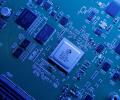
A joint venture of the Indian conglomerate Vedanta and Taiwanese electronics manufacturing giant Foxconn signed a memorandum of understanding with the Gujarat government on Tuesday to set up a semiconductor and display manufacturing unit in the state.

The US President had hosted Modi for an official working visit in Washington, DC, on February 13 last year.
The Union Cabinet on Wednesday approved a Rs 76,000 crore policy boost for semiconductor and display manufacturing ecosystem in the country in an bid to position India as a global hub for hi-tech production. Announcing the decision of the Cabinet, IT and Telecom Minister Ashwini Vaishnaw observed that electronics plays an important role in everyday life, and semiconductor chips forms a crucial part of electronics. Outlining the details of the scheme, he said the Rs 76,000 crore programme has been approved for the development of semiconductors and display manufacturing ecosystem.

If TVK MLAs and ministers are perceived as clean, or demonstrably cleaner than their predecessors, the credibility dividend will be enormous. The voter will feel rewarded, points out Ramesh Menon.

Investors and startup executives are calling for extending the period for an entity to be recognised as a startup from 10 to 15 years for deep-tech companies.
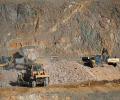
Western Coalfields Limited (WCL) has discovered significant concentrations of rare earth elements and critical minerals in its mines in Maharashtra, potentially transforming waste material into revenue-generating resources and diversifying the company's business.

Tata Electronics on Saturday began the construction of its Rs 27,000-crore chip assembly plant in Assam, which is expected to become operational next year and create 27,000 jobs initially. The plant will produce 4.83 crore chips per day using indigenously-developed technologies. The plant's Bhumi Pujan (foundation stone laying) ceremony was held at the project site at Jagiroad in Morigaon district in the presence of Assam Chief Minister Himanta Biswa Sarma and Tata Sons Chairman N Chandrasekaran.

Tata Motors recently cut the sales forecast of its luxury car brand, JLR, due to chip shortages, scaling down its production numbers from the earlier 120,000 units to 60,000-65,000 units by September, and leading to an almost 10 per cent fall in the company's stock. In May this year, Bosch India, too, had stated that chip shortfalls would impact its production, as supply chains were getting disrupted.

Sustaining 8 per cent-plus growth rates is necessary if we are to reach high-income status by 2047, points out Amitabh Kant.
